Why Atomic Clocks Win
How can a clock be wrong by less than a second in millions of years?
Your turn!
Question 1 of 2What does an atomic clock count?
The story
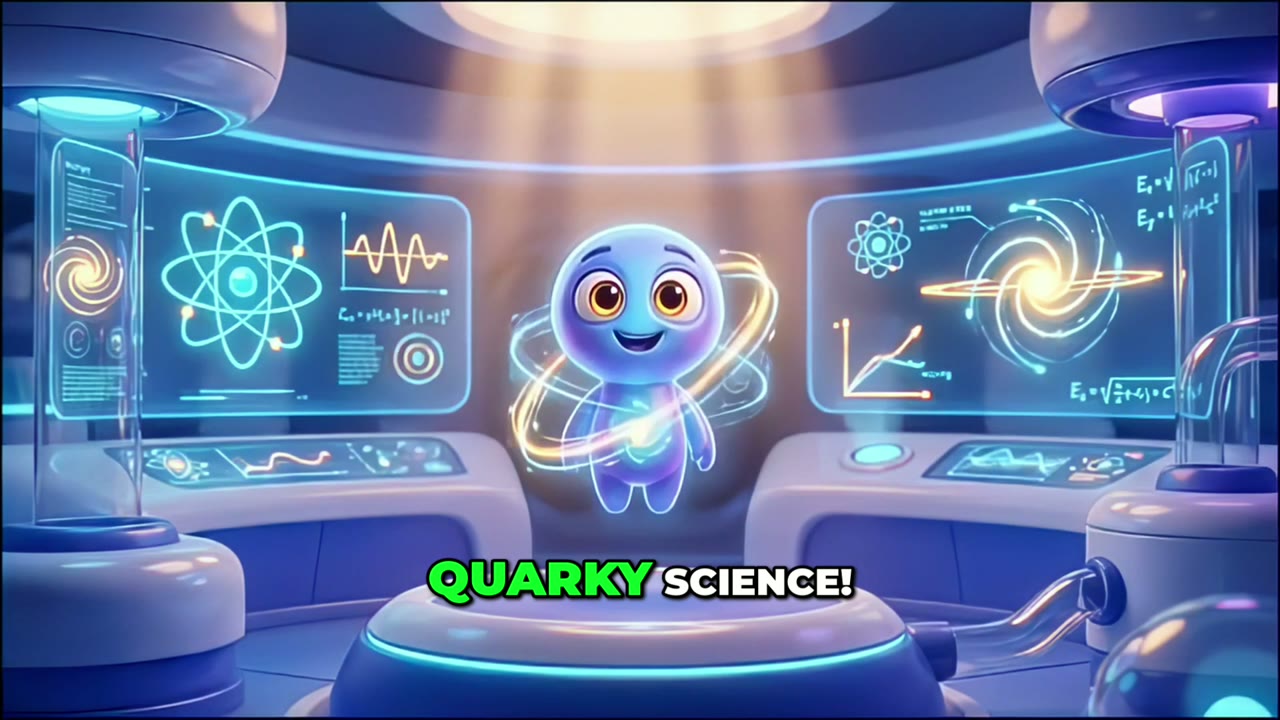
Quarky's wristwatch keeps drifting, and he misses the big rocket launch by a whole minute. So he goes looking for the most patient timekeeper in the universe. Inside an atomic clock, tiny cesium atoms hum at exactly the same beat, over and over, forever. Quarky counts along with them: 9,192,631,770 hums make one second, every single time. Springs stretch and pendulums swing differently when it is hot or cold, but atoms never change their tune. That is why atomic clocks run the internet, guide rockets and keep every phone map pointing the right way.
What you'll learn
- Atoms vibrate at one exact, unchanging frequency
- One second is defined by counting those atomic beats
- Spring and pendulum clocks drift with heat, cold and bumps
- Atomic clocks keep GPS, phones and the internet in step
Comments (0)
Sign in to join the conversation.
- Be the first to say something nice!
Up next
Quarky Science · Ep 1
Quantum Rain
What if light fell like rain, one tiny drop at a time?
Quarky Science · Ep 2
Why Tiny Crystals Glow Different Colors
Why do smaller crystals glow in different colors?
Quarky Science · Ep 3
Quantum Randomness Explained
Can something be truly random?
Quarky Science · Ep 4
Why Glow-in-the-Dark Stars Shine
How do glow stars keep shining after the lights go out?
Quarky Science · Ep 5
Photon Power
How much power is packed inside one photon?
Quarky Science · Ep 6
How Tiny Quantum Jumps Make LEDs
What makes an LED light up?