See the Invisible: Electron Microscopes
Why can not the best light microscope show an atom?
Your turn!
Question 1 of 2Why can light microscopes not show an atom?
The story
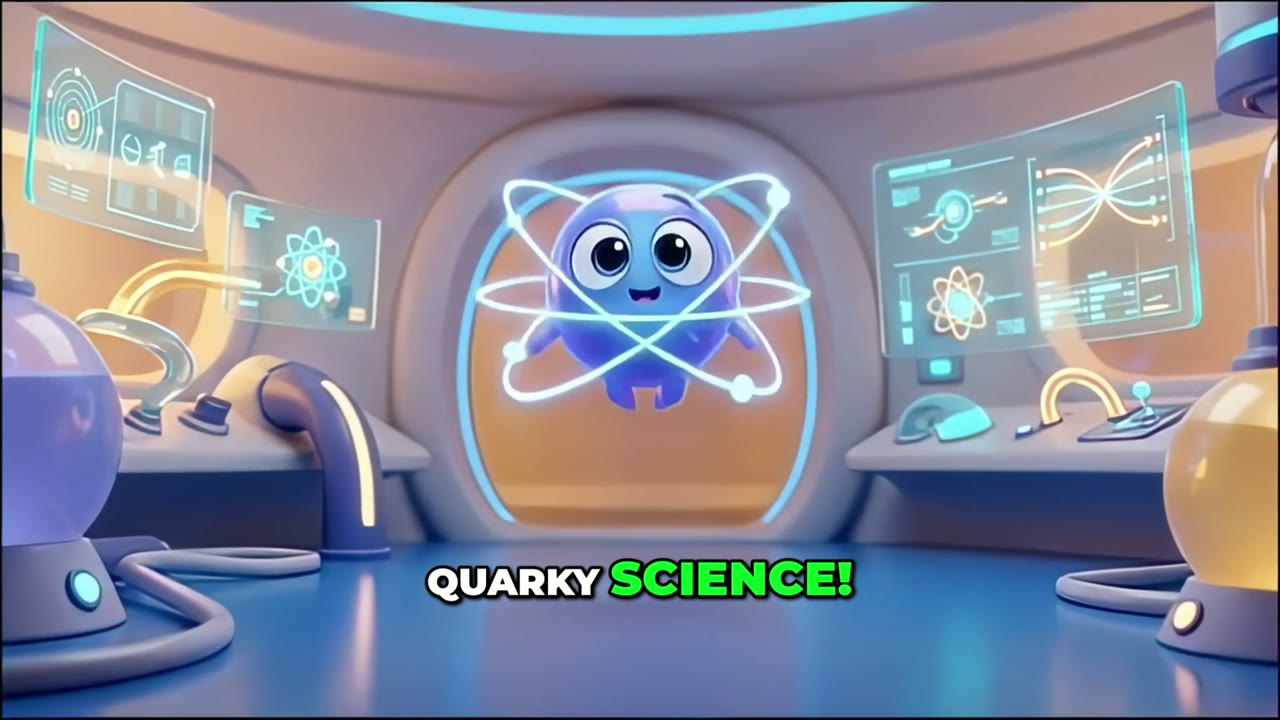
Quarky zooms in with a light microscope and everything turns into a blur. Light waves are just too chunky to trace something as tiny as an atom, like trying to feel a grain of sand with a giant mitten. So scientists swap light for electrons, whose waves are thousands of times smaller. Suddenly viruses, crystals and even rows of atoms snap into view.
What you'll learn
- Microscopes cannot see things smaller than their wave
- Visible light waves are far bigger than an atom
- Electrons act like waves too, but much smaller ones
- Electron microscopes reveal viruses and atom patterns
- Wave size sets the limit of what we can see
Comments (0)
Sign in to join the conversation.
- Be the first to say something nice!
Up next
Quarky Science · Ep 1
Quantum Rain
What if light fell like rain, one tiny drop at a time?
Quarky Science · Ep 2
Why Tiny Crystals Glow Different Colors
Why do smaller crystals glow in different colors?

Quarky Science · Ep 3
Quantum Randomness Explained
Can something be truly random?
Quarky Science · Ep 4
Why Glow-in-the-Dark Stars Shine
How do glow stars keep shining after the lights go out?
Quarky Science · Ep 5
Photon Power
How much power is packed inside one photon?
Quarky Science · Ep 6
How Tiny Quantum Jumps Make LEDs
What makes an LED light up?